SaaS MVP Development in the UK: From Idea to Launch in 90 Days
Dec 15, 2025
20
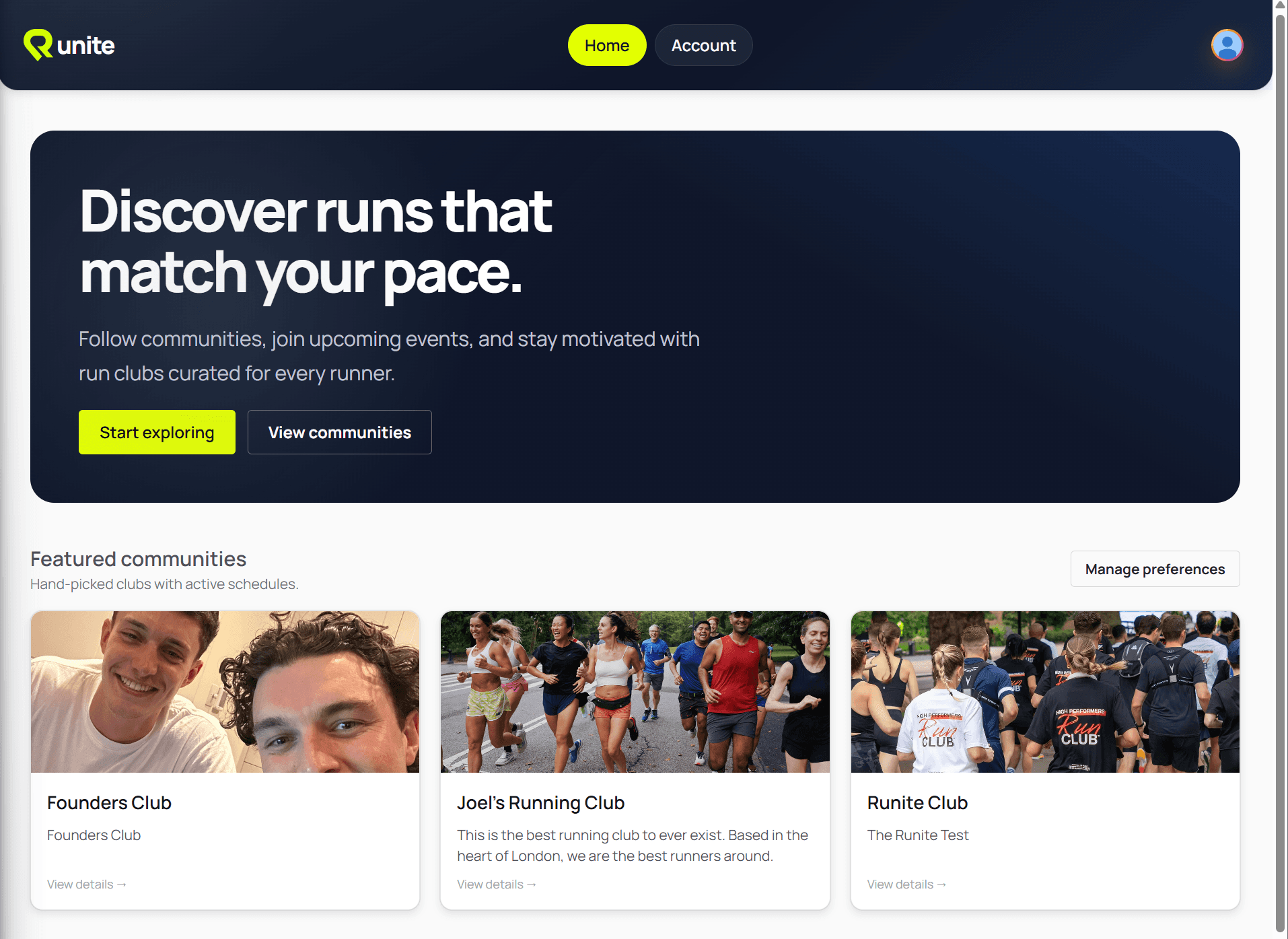
How We Built Runite, a Complete Run Club Operating System, in Just 60 Days
Most founders assume a SaaS platform takes 6 to 12 months to build.
The truth is that with the right architecture and disciplined scope, you can ship a functional, high quality MVP in 60 to 90 days.
In this case study, we break down exactly how we helped Runite Ltd transform a fragmented run club ecosystem into a scalable SaaS plus marketplace platform, from idea to UX, development, and launch.
Runite is now set to modernise run clubs across the UK, giving owners the tools to operate professionally while giving runners confidence they are booking sessions that match their skill level.
The Challenge
Run clubs faced several major operational bottlenecks.
1. Payments were a nightmare
Clubs handled event fees and memberships using:
Manual bank transfers
Cash
Scattered spreadsheets
There was no clean way to enforce capacity limits or reconcile payments automatically.
2. No unified member management
Organisers lacked tools to:
Track membership status
Manage attendance
Understand community data
Monitor growth trends
Everything was manual.
3. Runners struggled to find the right sessions
“Beginner friendly” meant something different for every club.
Runners often attended groups that were:
Too fast
Too slow
Not aligned with their ability
This created a poor first experience.
4. The platform needed a dual revenue model
Runite required:
A SaaS subscription for club owners
A marketplace model for event tickets and memberships
Automated Stripe fee splitting between the platform and club owners
This is complex to architect for scale and financial accuracy.
QDev’s Solution
We designed and built Runite, a platform giving clubs a complete operating system while offering runners a clean discovery and booking experience.
What previously lived across WhatsApp chats, manual spreadsheets, bank transfers, and Google Forms is now a centralised, automated platform.
Key Capabilities
For Club Owners
Automated payments for tickets and memberships
Accurate capacity management
Skill based runner segmentation
Community analytics
Attendance tracking
Stripe Connect onboarding
SaaS subscriptions via Stripe Billing
For Runners
Discover clubs based on running pace
See clear event difficulty levels
Book sessions instantly
Receive tickets, receipts, and calendar invites
Track personal progress over time
The platform enforces pace alignment, ensuring runners join events suited to their level. This has quickly become Runite’s competitive advantage.
Technical Foundation
This MVP was not a quick hack. It was architected to scale.
Architecture Overview
Monorepo powering two React applications plus a Node.js API
Firestore as a flexible, scalable NoSQL database
Stripe Connect for marketplace payments
Stripe Billing for SaaS subscriptions
Firebase Authentication for secure login
Google Places API for run venue data
Postmark for transactional email
ICS calendar generation for seamless event syncing
Render, or similar, for reliable hosting
Frontend Stack
React
TypeScript
Vite
Chakra UI
Shared UI and logic packages
Backend Stack
Node.js
Express
Firebase Admin SDK
Zod for schema validation
Core Technical Features Built
Payments Router
Handles marketplace purchases, automated fee splitting, payouts to club owners, and platform commission calculation.
This ensures complete financial accuracy between Runite and each club.
Stripe Connect Router
Automates creating connected accounts, sending onboarding links, status checks, and refreshing onboarding flows.
This allows Runite to operate with low overhead, even as clubs scale.
Skill Based Runner Matching
A proprietary system that analyses runner pace, aligns runners with suitable clubs, reduces drop off, and ensures safe, enjoyable sessions.
This system becomes a data moat as more runners use the platform.
Club Owner Analytics
Aggregates Firestore data to produce insights including revenue trends, gender breakdown of attendees, pace segmentation, membership counts, and event utilisation.
This turns Runite into a growth engine for clubs.
Automated Operations
Ticket confirmation emails
ICS calendar invites
Subscription updates
Payment webhooks
Data backfills
Currency normalisation scripts
Operational Excellence
Payment Observability
A robust webhook handler ensures the database state always matches Stripe’s financial reality, which is essential for trust and compliance.
Security
Helmet secured Express server
Global and route level rate limiting
Strict Firestore rules
Validation via Zod
Sanitised input and hardened APIs
Performance
Low infrastructure costs
Fast deployment pipeline
High responsiveness
Minimal maintenance overhead
The Impact
For Club Owners
Automated payments
Accurate attendance tracking
Growth analytics
Easy event management
A recurring SaaS plan worth upgrading
For Runners
A clean, modern booking experience
Confidence they are joining the right pace group
Automatic ticketing and calendar invites
A personalised running journey
For Runite
A dual revenue model combining SaaS subscriptions and marketplace transaction fees, with extremely low running costs and a strong competitive moat driven by pace data.
Results (Early Indicators)
High pre launch sign up interest from both clubs and runners
Exceptionally low operational cost per month
High client satisfaction and rapid iteration cycles
Fast bug resolution due to the monorepo and schema structure
How Long Should a SaaS MVP Take?
Most UK MVPs take 12 to 20 weeks.
With QDev’s model, it takes 60 to 90 days.
Runite was delivered in 60 days.
Because we focused on validation over perfection, built a scalable technical foundation, worked in tight weekly sprints, and removed non essential features early.
Planning Your SaaS MVP?
QDev specialises in fast, scalable SaaS MVP builds with strong architecture, secure payments, real time data, automated operations, clean UX, and predictable delivery timelines.
If you want to build a SaaS platform that goes from idea to launch in under 90 days, book a free discovery call at https://www.qzee.dev, get a scope and quote within 48 hours, and start building with a senior UK team.